
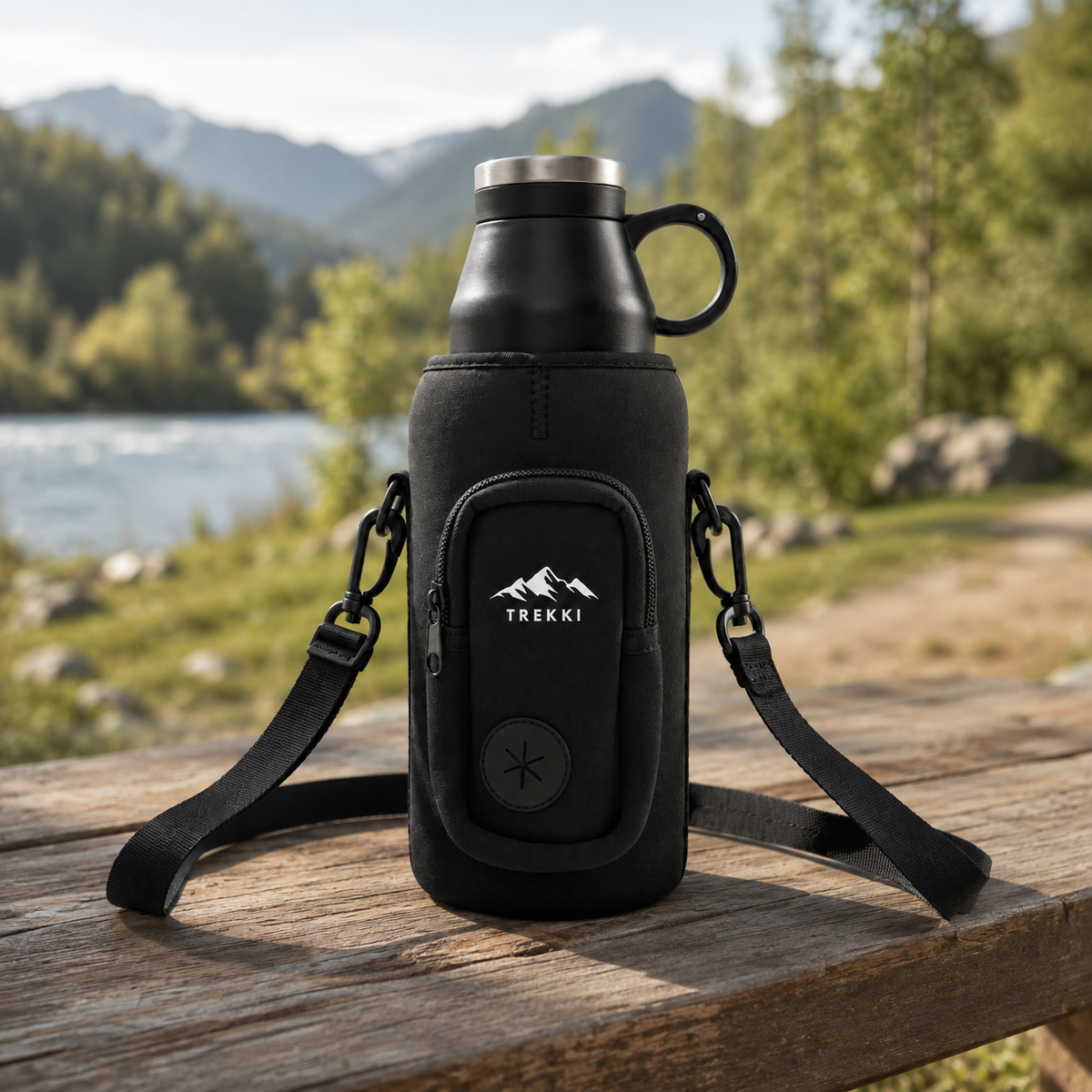
Choose a small dog walking bag when your essentials fit comfortably and you value quick access. Choose a backpack when you regularly carry extra water, layers or several people's belongings. The right answer depends on the loaded bag, not its empty size.
There is no need to buy a specialist bag if your existing one does the job. Test it with the equipment you actually use, then identify the specific limitation you want a replacement to solve.
Make two realistic packing piles
Create one pile for your usual local walk and another for a longer outing. Both need your normal essentials, but the second might include more water, spare clothing and a towel.
Do not add hypothetical extras just to fill a larger bag. Equally, do not remove necessary supplies to make a smaller one appear adequate. The comparison only works when each pile represents a sensible real outing.
Measure the largest item and look at the space needed around it. A bag's quoted capacity does not tell you whether its opening or bottle pocket will accommodate your particular kit.
Compare access while holding a lead
A small shoulder or cross-body bag can put frequently used items within reach. A backpack may require you to stop and take it off to reach the main compartment. Neither is automatically better; the important question is whether you can use it comfortably while keeping control of your dog.
Check whether poo bags, treats and your phone have separate accessible places. Water can usually wait until a deliberate pause, so it need not occupy the easiest small pocket.
If something requires both hands, stop in a suitable place. Bag convenience should not turn into an attempt to do every task while walking.
Check comfort with water inside
Put your intended water supply in the bag for the trial. Add your normal coat or layers too, because straps can sit differently over different clothing.
Walk around at home, bend to pick something up and reach for the items you use. Notice whether the bag swings, slips, digs in or pushes the bottle into your side. Adjust only within the design's intended range.
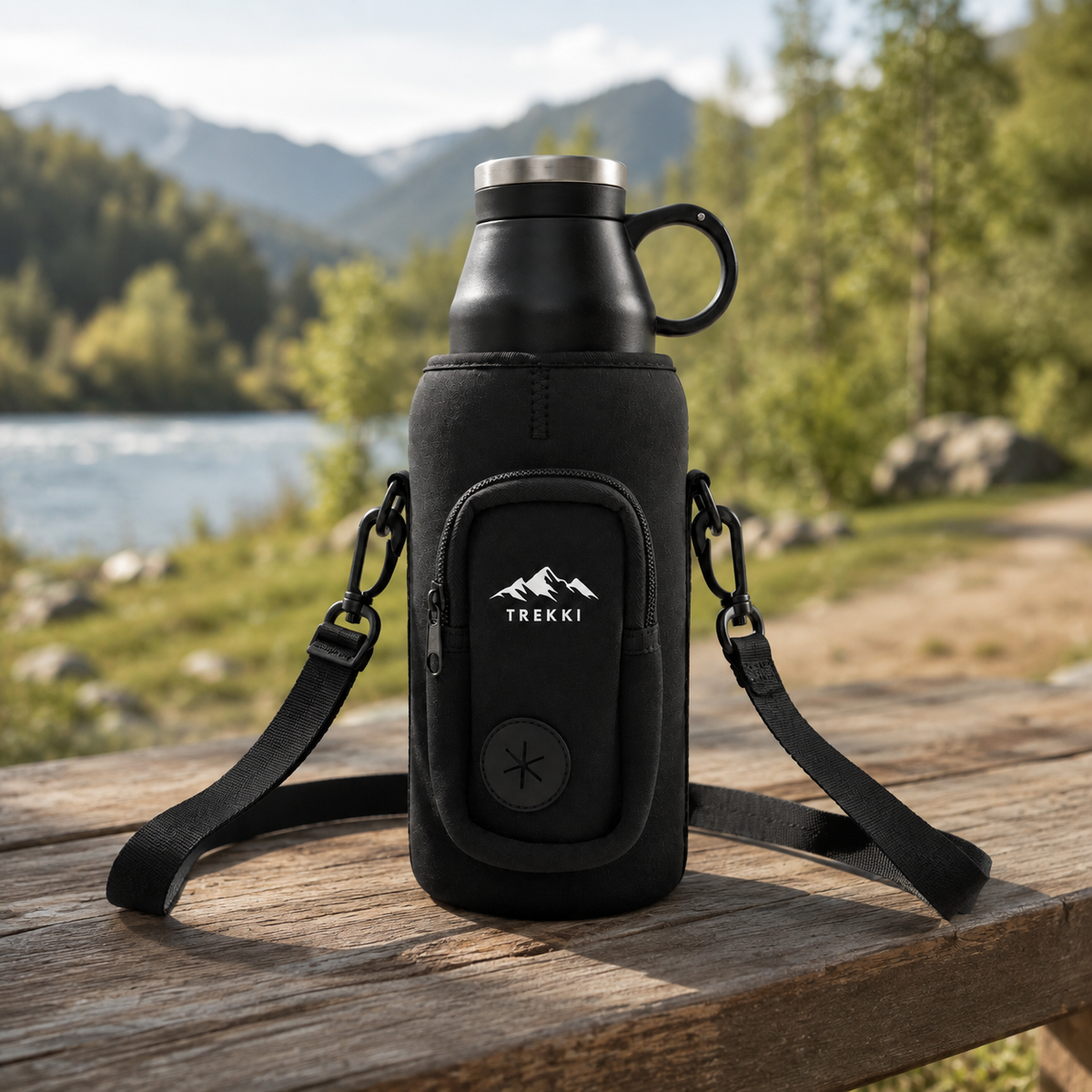
A Trekki bottle with Buddy Bag offers its own removable carrying strap. It may suit a compact setup, while a backpack may be more practical when you need room for several other things.
Leave space for the return
The packed bag should still close comfortably after a walk. Used equipment does not always fold as neatly, and a damp towel needs separation from clean belongings.
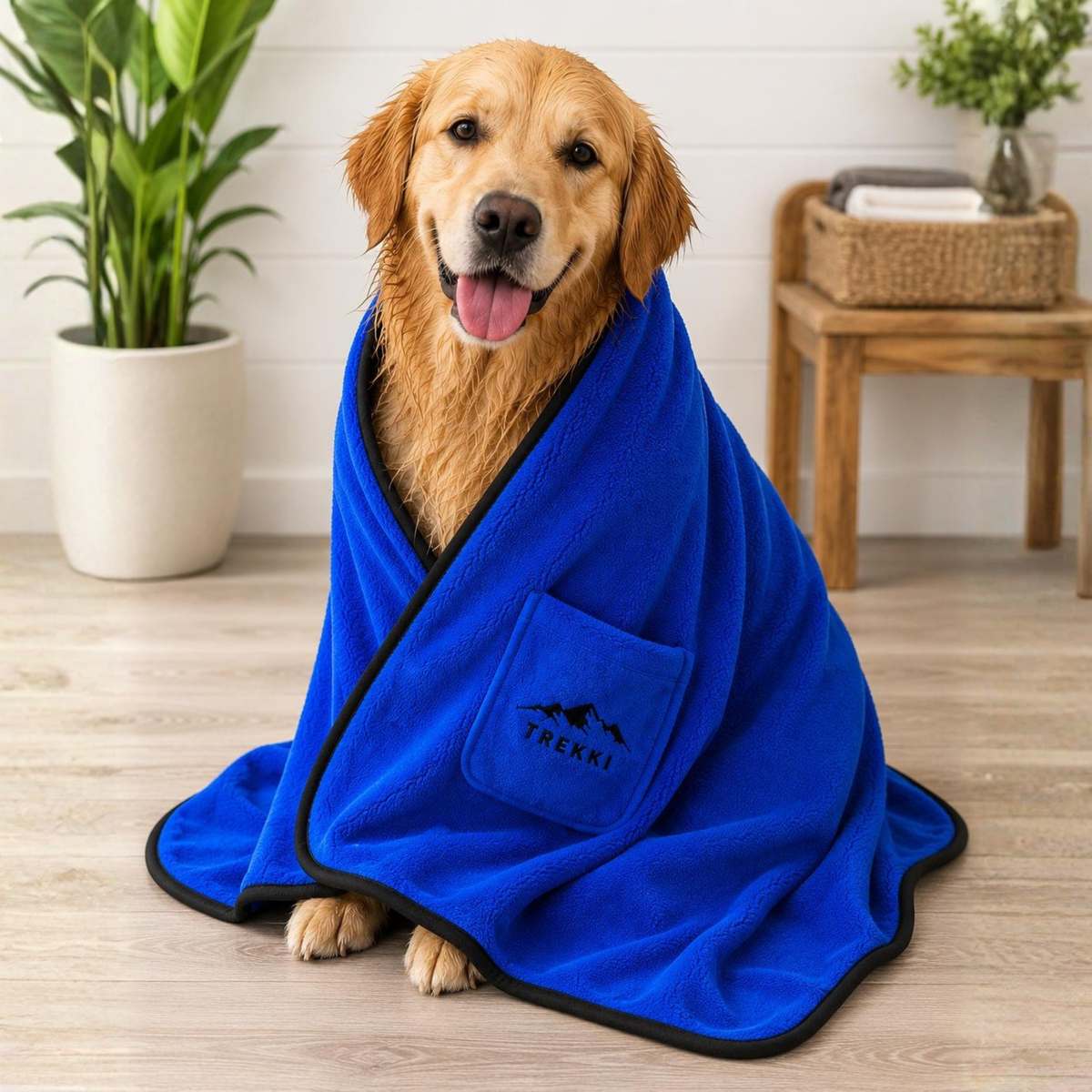
If you normally leave the dog towel in the car, a small walking bag may be enough. If you carry it throughout the route, include its packed size and a suitable used-kit pouch in the comparison.
Avoid relying on loose equipment dangling from the outside to compensate for an overfilled bag.
Consider who else uses it
A bag adjusted perfectly for one person may need a different strap setting for another. Check the adjustment range and explain where small essentials live.
For shared equipment, simple pocket assignments matter more than a large number of compartments. A bag that everyone can reset is more useful than one that depends on a single person's packing technique.
Decide from the problem, not the category
- Choose easier access if frequent rummaging is the main frustration.
- Choose more usable capacity if necessary supplies regularly do not fit.
- Choose a different carrying arrangement if the full load is uncomfortable.
- Keep your current bag if a better layout solves the issue.
Try the three-part bag organisation method before spending money. It can reveal whether you need a new bag or simply a clearer home for the equipment you already own.

Leave a comment
This site is protected by hCaptcha and the hCaptcha Privacy Policy and Terms of Service apply.