
A useful dog towel is large enough for the job, comfortable to hold and easy to wash and dry within your normal routine. Thickness alone does not tell you whether it will suit your dog, your hallway or the bag you take on a walk.
Before comparing products, decide where the towel will be used. A towel that lives by the back door can be bulkier than one carried on every outing. A car towel needs to be accessible at the end of the route, with somewhere separate to put it afterwards.
Choose the job before choosing the size
Think about whether you mainly wipe damp paws, dry a wet coat or deal with several dogs after one outing. Those are different jobs. There is no single towel size that will be right for every dog and every situation.
Use a towel you already own as a measuring reference. Lay it flat, note its dimensions and consider which part of the task feels awkward. If it is hard to hold both ends, a larger towel might make that problem worse. If you run out of dry fabric quickly, extra usable area or a second towel may be more helpful.
This comparison gives you a real starting point instead of judging size from a product photograph.
Compare handling features
Smooth fabric can be difficult to keep hold of when your hands are wet. Hand pockets provide somewhere to place your hands, while a simple rectangular towel offers flexibility over how you fold it.
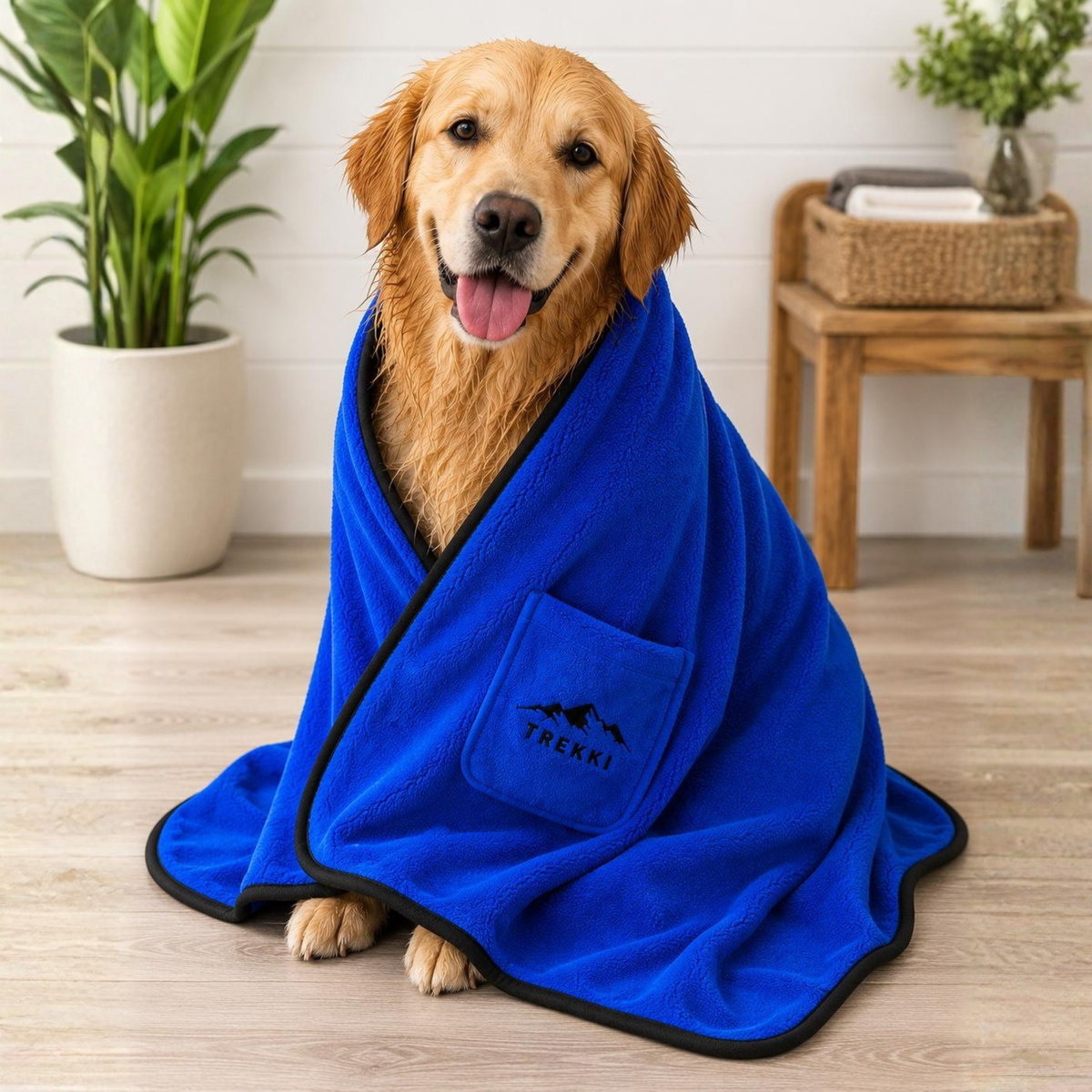
The Trekki Premium 500 GSM Microfibre Dog Towel has two hand pockets and measures 50 by 100cm. Those are concrete details to compare with your current towel. They do not mean every dog needs that size or that a towel will replace other care your dog's coat requires.
Choose equipment your dog is comfortable around and use it gently. If drying is repeatedly difficult or your dog seems uncomfortable, seek appropriate professional advice rather than trying to solve the issue by rubbing harder.
Understand what the fabric specification tells you
GSM describes fabric mass per square metre. It can help compare how substantial towels are, but it is not a direct measurement of how quickly a particular dog will dry. Weave, construction, towel size, coat and the way you use it all affect the experience.
Avoid choosing purely from dramatic absorbency claims. More useful buying questions are whether the towel is manageable in your hands, whether it fits your storage space and whether its care instructions suit your household.
If the listing does not answer those questions, ask before ordering.
Plan the wet towel's journey home
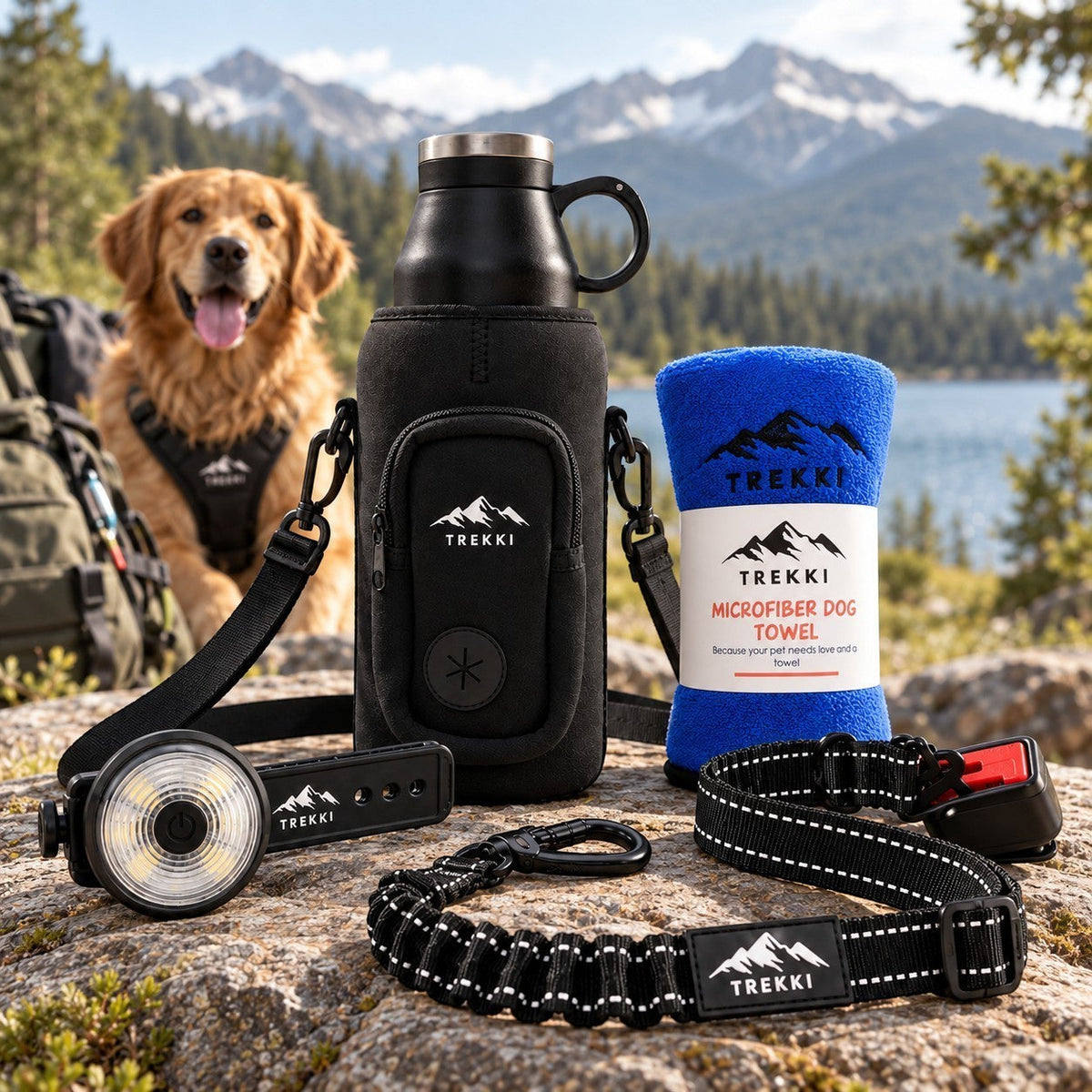
For a towel carried in a backpack, compare folded size alongside the bottle and spare clothing. Keep it protected from leaks and damp equipment until you need it. Once used, separate it for transport and unpack it promptly at home.
For a car-based walk, put it where you can reach it without unloading the entire boot. A towel underneath shopping or luggage may be technically packed but practically unavailable.
Our guide to organising a dog walking bag shows how to separate equipment needed during the walk from clean-up items.
Check washing and drying requirements
Read the actual care label rather than assuming all microfibre products need the same cycle. Check washing temperature, drying instructions and any restrictions on laundry products. Allow enough drying time before the towel returns to a closed bag.
If your only towel is still damp when the next walk starts, consider a simple rotation. Two suitable towels used alternately can be more practical than repeatedly packing one that has not dried.
Make a short comparison list
- Flat dimensions and how they compare with a towel you already use.
- Grip, pockets or other handling features.
- Folded space in your bag or car.
- Washing and drying instructions.
- Where the used towel will go.
Pick the option that fits the whole routine, from opening the door to putting clean equipment away again. That is a better basis for a purchase than size or thickness considered on its own.

Leave a comment
This site is protected by hCaptcha and the hCaptcha Privacy Policy and Terms of Service apply.