
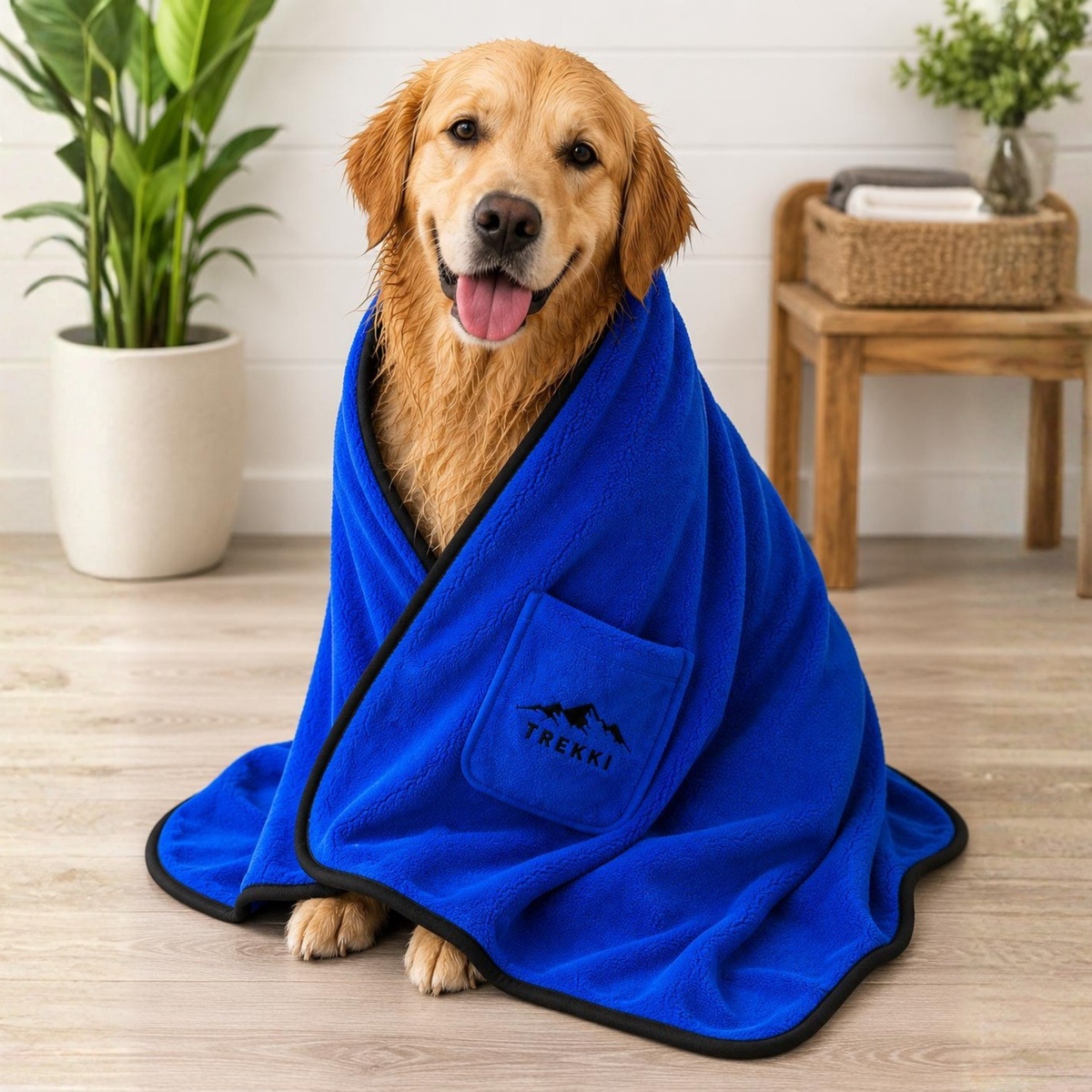
Wash and dry a dog towel according to its own care label, then let it dry fully before returning it to a closed walking bag. There is no single wash temperature or dryer setting that should be assumed for every dog towel.
A reliable routine matters more than an elaborate laundry method. The useful questions are where the used towel waits, when it gets washed and how you know a clean one is ready for the next outing.
Read the instructions while they are easy to find
Check the sewn-in label, packaging and current manufacturer's care information. Note permitted washing and drying methods, temperature limits and any restrictions on laundry products.
If a symbol or instruction is unclear, ask the seller or manufacturer. Do not substitute advice for a different towel simply because both are described as microfibre.
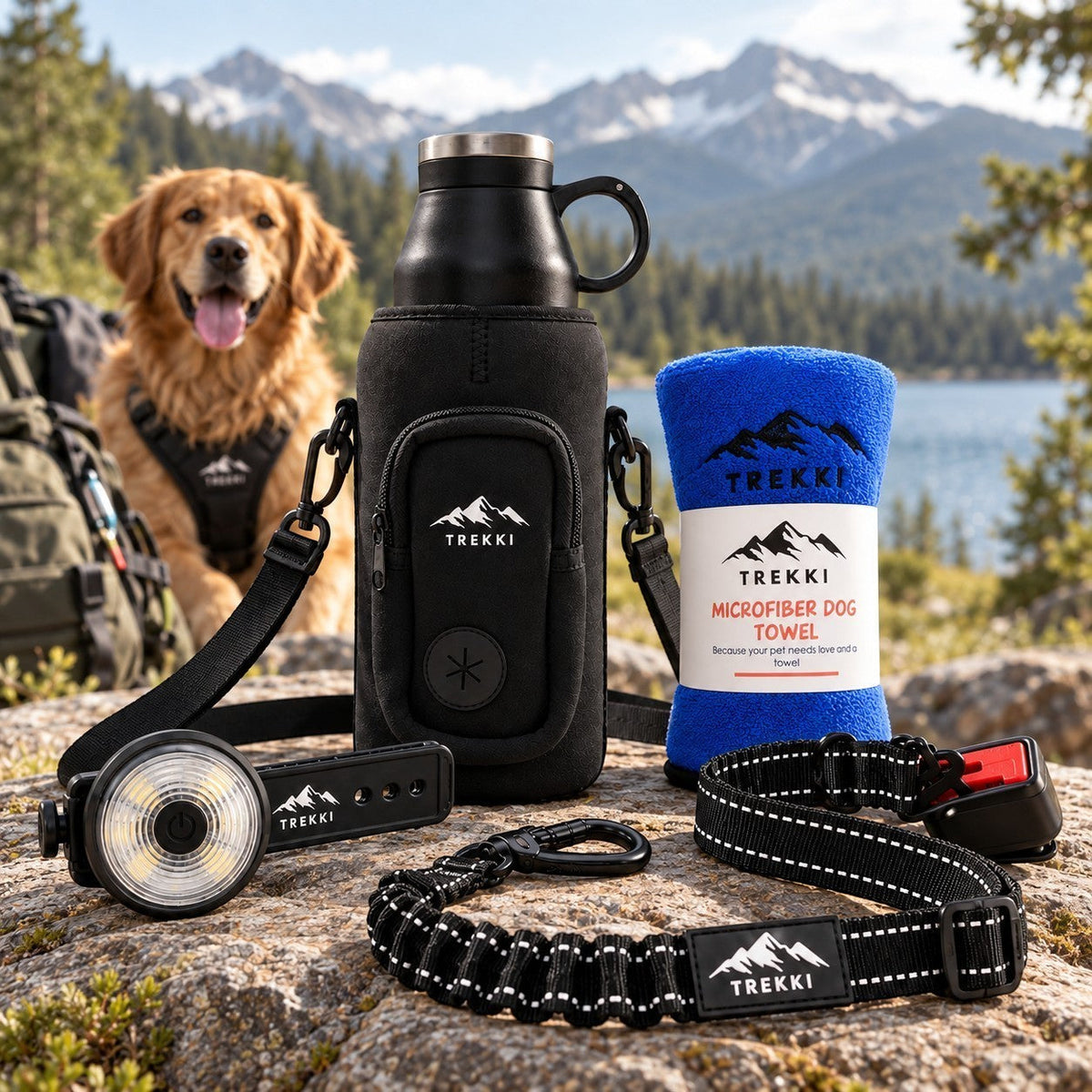
The Trekki 500 GSM microfibre dog towel is listed as machine washable. Follow the specific care information supplied with it for the cycle and drying method rather than guessing from that general description.
Create a used-towel place
After a walk, separate the used towel from clean bedding, clothes and drinking equipment. A transport bag can keep moisture contained on the journey home, but unpack it promptly on arrival.
Use a suitable laundry area that protects surrounding surfaces. Keep the towel distinct from the clean spare so another person does not accidentally repack the used one.
Deal with loose debris using an appropriate method before washing, and follow your washing machine's instructions as well as the towel's. Avoid putting heavily soiled equipment straight into a load without considering both.
Keep the washing routine simple
Use the care label to choose the cycle and suitable laundry products. Do not assume that extra heat, more detergent or additional treatments will improve the result.
Leave enough room for the load to move as directed by your machine's guidance. If the towel needs a different cycle from your other laundry, give it a separate place in the routine rather than repeatedly postponing it.
Keep a note of any manufacturer-specific restrictions with your household laundry information if several people share the task.
Dry it before closing it away
Use only a drying method permitted by the towel's instructions. Check the entire towel, including pockets and folded sections, before deciding it is ready to store.
A towel that feels dry on one exposed edge may still be damp where layers overlap. Open it out as appropriate for the drying method and allow enough time for those areas.
Do not put a partly dried towel back into a sealed pouch to make the hallway look tidy. The storage system should accommodate the care routine rather than interrupt it.
Use a two-towel rotation if needed
For frequent wet walks, one towel can be ready while another is being washed or dried. Keep the clean one in the walking station and the used one in the laundry area.
A rotation is useful when it solves a real timing problem. You do not need multiple spare towels if your existing one reliably dries between outings.
Our small-hallway storage guide offers a simple way to keep ready equipment, clean towels and used kit separate.
Review condition during folding
Look for worn seams, damaged pockets or changes that make the towel awkward to use. Follow any manufacturer guidance about continued use and replacement.
Fold it to suit the space where it will actually live. A car towel may need a different arrangement from one carried in a backpack, but both should remain clean and accessible.
Finish by replacing the towel in its agreed place. That final step turns laundry into a complete walking-kit reset rather than leaving a clean towel somewhere nobody thinks to look.

Leave a comment
This site is protected by hCaptcha and the hCaptcha Privacy Policy and Terms of Service apply.